


Levelling up – A Socitm response
To support the emerging post-pandemic picture across the UK, Socitm has developed a narrative around Regeneration, Sustainability, Connectivity (RSC). We are proud to be championing this on behalf of our 2,500 members throughout the UK.
Through this lens, we will support our members in playing their part in delivering the 12 missions set out for Levelling Up (LU), building on local, place-based capability and capacity, and harnessing data to:
- Better understand the distribution and root causes of inequalities;
- Target resources and know-how to address these causes (level-up); and
- Deliver a sustainable reduction in regional variation in healthcare and wellbeing of people and communities.
Debate around what will be achieved or celebrated by politicians in media soundbites from the ’12 missions’ that make up LU will play out in the months and years to come. However, local authorities have already rolled their sleeves up and demonstrated that RSC are already high on their agendas.
Local public service leaders are constantly asked to re-think the ‘art of the possible’ in relation to whether and how they should use technologies and data.
To support this, Socitm has developed several resources and briefings which capture the phenomenal response that has unfolded since the pandemic gripped the nation two years ago.
Our Planting the flag – a new local normal, Covid-19 digital impact survey and Our digital jump into the future report together give detailed insights into the impact and response of local government organisations during the pandemic. Our wider work around key policy themes, ethical practice, leadership development, emerging digital trends and the application of concepts such as doughnut economics inspiring healthy and well communities are all shaping our understanding of ethical, digital placemaking .
An accompanying Championing place-based recovery infographic draws these resources together and, drawn from more than 200 local authority recovery and regeneration strategies, maps out how local authorities are seeking to move from front-line response, via local post-covid recovery, towards community focused regeneration.
Alongside this, our place-based recovery prospectus goes further by highlighting how a variety approaches are supporting wider community regeneration and ethical change, issues that assume even greater relevance in preparation for the societal and environmental challenges that lie ahead.
On collaboration, we have much to learn from the recent example of the vaccine roll out. Strong leadership from local government to really understand the people in their patch allowed local authorities to be the interface with the community, while the NHS brought the scale of delivery.
While the words may have changed, the required actions have not. The focus is on local authorities and authentic place-based leadership, which involves bringing citizens in early, along the long road of recovery. Socitm plans to deliver resources and to engage with its members to enable them to play an active part in the practical delivery of LU and its outcomes.


Get the Latest UK Government News
Personalised and Direct to Your Inbox
The No.1 official UK government alerting news platform. Get the latest news all day - everyday right at your fingertips.
Delivering 60+ feeds NOT available from GOV.UK, including Information Commissioner’s Office (ICO), Socitm, National Cyber Security Centre (NCSC) and MI5.
Personalise your experience by selecting what you want to see, and how frequently you want to be updated on breaking government/public sector news and announcements. Register for free and customise your account to your interests.
Find out more and register for your free account on WiredGov

Computer Aid: Help Us Help Ukraine
We are proud to have Computer Aid as the SITS charity partner. They have brought access to technology to over 14.5 million people. Their goal is to build a world where everyone has equal access to technology through sustainable IT solutions, providing access to high-quality equipment and education in the developing world.
Over the last few months, millions of Ukrainian people have had to flee their homes to find safety. Whilst doing so, many of their mobile devices have been stolen, lost, or damaged.
These devices are crucial in connecting refugees to family members back in Ukraine and finding them transport, accommodation and, ultimately, safety. Without them, they are completely disconnected and in even more danger.
What are Computer Aid doing to help?
With the support of their partners at N50, they have started to deploy containers equipped with a variety of digital services including charging stations, computers and internet access. This allows the refugees to find any information they need online and also to communicate with their loved ones. They plan to deploy these portable solutions where there is more concentration of refugees, starting at the Romanian border with Ukraine.
They will also send and distribute as many devices as they can to help reconnect these people. Computer Aid have a number of mobiles and tablets ready to go but require additional funding so that all devices can be delivered with a charger and sim card.
How can you get involved?
Computer Aid have an initial fundraising goal of £20,000 but as long as they keep raising, they will continue to send devices to Ukraine. Millions of displaced families need these devices and they plan to help as many as they can.
Even a small donation could allow them to purchase the necessary accessories to send another device to those desperately in need. Head to the donation link below to find out more: https://www.justgiving.com/campaign/computeraid-helpushelpukraine

SITS - the magic is still there
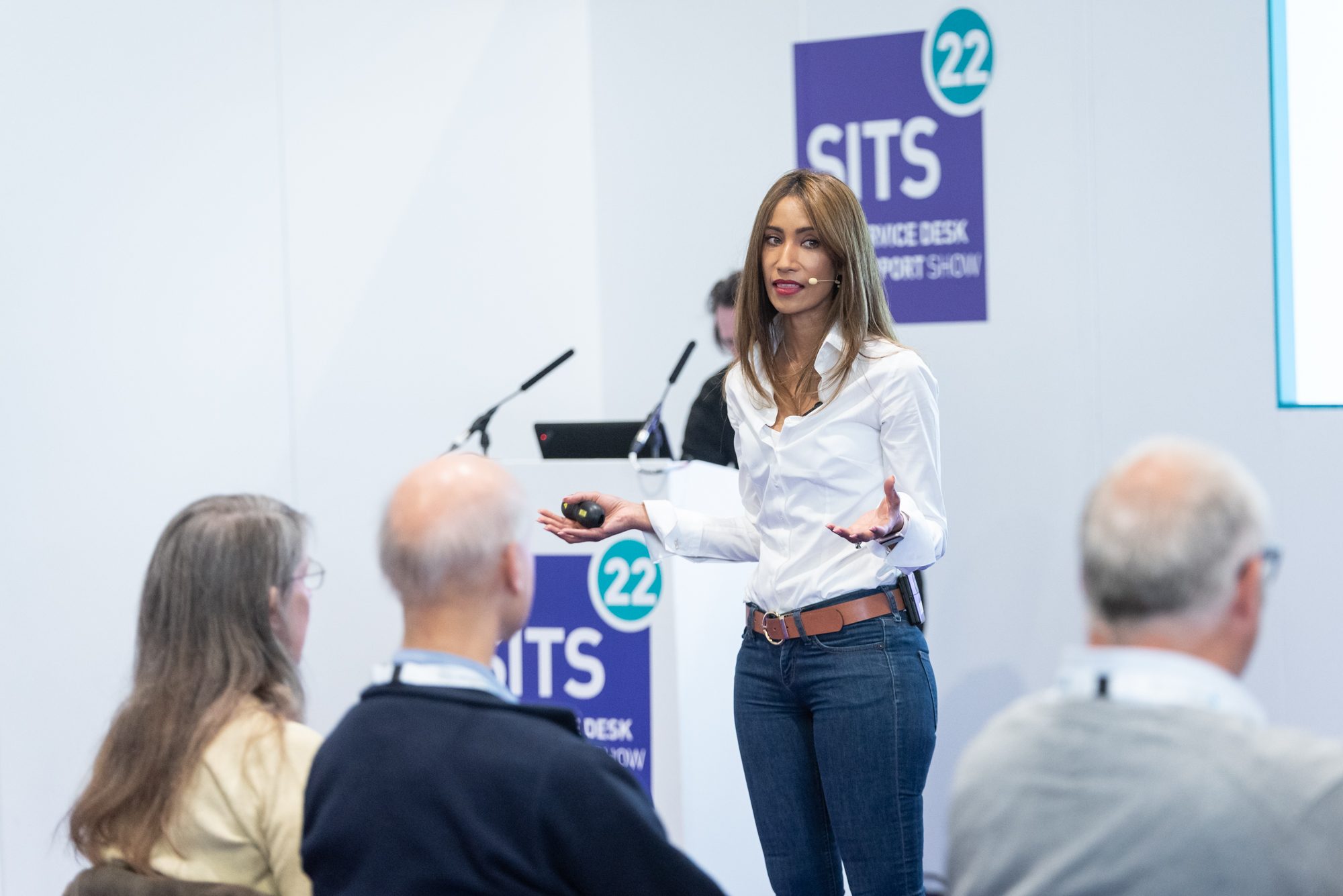
Last week Diversified put on one of the two best conferences that England, heck Europe, offers in terms of IT Service Management: SITS. Once known as the Service Desk show, SITS provides a magical mix of vendors, speakers and networking over two days for anyone interested in agile, devops, leanIT, ITIL, SIAM, Mental health for IT, leadership and more. People, processes, and all of the fun stuff in one event!
Before the pandemic, many of my conference friends and I had built up mental and physical conference skills and attributes. Two years away, wow, what a difference. Let's start with shoes. I have not worn proper shoes for a long time and now for two days, well shoes. SITS is a tremendous experience in a large conference facility covering a vast floor space. You walk a lot at SITS.
Networking. I have not seen my friends and colleagues in person for over two years. Do you shake hands, hug, or elbow bump? Forget the two-metre rule because SITS attracts hundreds of people! Some people had masks, but most did not. Beer and wine at the end of day 1, coffee baristas inside the event, pizza or curry at night. This is SITS!
Vendors galore. Some had exciting software to measure the experiences of staff and customer satisfaction. Imagine knowing in real-time whether what you delivered as a service met the customer's needs or helped your teams. Experience knowledge and leadership are the fundamental concepts of 2022. Warning to vendors: make sure your staff can tell a story that matters to the person. Asking what would you like to see or saying we sell ITSM software means nothing. After 50 years of dealing with vendors and consultancies in my career, I am happy to teach you how to act at a conference.
Speakers: loads of speakers on every conceivable topic important to those that want technology to enable their staff or help customers. Regular sessions, panels, hot-topic discussions (I did one on metrics), free advice at stands, interviews of legends being taped, and breakfast sessions. SITS is a learning and sharing experience.
Back at hotel day 1: I had walked miles, my feet were sore, my hands and elbows hurt, my head was pounding with all that I had learned, my stomach was full of wine and pizza.
See you at SITS 2023!
Daniel Breston: 50 years of leadership and consultancy in IT. Now rebranded as the Retired Coach (working his way), Daniel speaks at events, blogs for himself and others, board member of is itSMF UK, a Fellow of the British Computer Society, and generally is just having fun keeping up with the opportunities being offered by technology to individuals and organisations.

Free Whitepaper: From Disrupted to Distributed
Splashtop share their Whitepaper: Disrupted to Distributed: How IT is navigating the changing work environment. You can view it here.
You can visit the Splashtop team who will be exhibiting on stand 483 at SITS, The Service Desk & IT Support Show on the 11 and 12 of May at ExCeL London.

SITS Q&A: Aaron Perrott, CTO at KTSL
Aaron has worked in service management for over 25 years and has a wealth of expertise in the sector. As CTO at KTSL, Aaron’s focus is on driving innovation. Through the development of applications using artificial intelligence and even augmented reality, Aaron creates smart solutions to improve ITSM. We got to know Aaron before his session at SITS...
- What tips would you give Service Desk & IT Support Professionals looking to drive their IT services forward?
• Simplify
• Consolidate and improve your data
• Show a measurable outcome to the business and leadership teams
• Focus on measurable immediate wins as well as longer term ones
- In addition to your seminar session, why would you recommend others to visit SITS?
• Lots of broad industry views in one place – makes it easier to compare and contrast
• Gives a better holistic overview of the market and what companies are looking for
• Good place to network with likeminded professionals with shared and common objectives
- What can we look forward to in your session?
• Refreshing, simple, clear take on a practical topic that many struggle to manage
• Pragmatic, authentic “delivery based” approach to solving actual problems
• Language that can be used across the business, key to gaining ‘buy in’
- What is one common misconception about the industry you would like to change?
• It’s all about process. It’s so much more about people now
• IT is technical, we work in silo’s. We have a much broader knowledge across teams now which we simply don’t leverage
5. What’s the best advice you’ve ever been given?
• IT serves the business, you have to deliver in that way
• The more boundaries you can breakdown, the more collaboration you garner, the better value your deliver
You can catch Aaron's session ‘Build your CMDB (while AI does the heavy-lifting!)' on 12 May 2022 at 3pm – 3:45pm, Theatre 2 at SITS, The Service Desk & IT Support Show at ExCeL London.
Register for a free visitor pass, here.

SITS Q&A: Ashwin Ram, Evangelist at ManageEngine
Ashwin Ram is a product marketer from ManageEngine with over five years of experience in IT service management. He writes articles and best practice blogs for ITSM practitioners. He has also authored several ITSM white papers across various topics, including KPIs and metrics along with AI in ITSM. Being an ITSM enthusiast, Ashwin is a regular at ITSM events, often representing ManageEngine. We caught up with Ashwin before he takes the stage at SITS...
- What tips would you give service desk and IT support professionals who are looking to drive their IT services forward?
With the advent of hybrid workplaces, service desk and IT teams now must deliver seamless user experience through a quality IT environment for all employees, irrespective of their work location. In order to achieve this, service desk teams and IT support professionals should:
- Evaluate the effectiveness of current service delivery processes
- Redesign them to suit the needs of the hybrid workplace
- Strengthen IT asset management practices
- Onboard all critical departments like HR, facilities, and finance on an enterprise service management platform
- Build a unified self-service portal for all employees
- What are you excited for at SITS?
I'm really excited about being there this year, and for the opportunity to meet and network with our customers, industry experts, and influencers.
- What do you love most about what you do?
Being an ITSM evangelist at ManageEngine puts me in a distinctive spot in the industry. My everyday job gives me exposure to the latest developments and innovations at the ManageEngine garage, and opens up opportunities for customer interactions which helps me understand how they utilise these technologies and tools in their daily operations. Also, conversations with leading analysts and industry trackers helps me see the big picture. This gives me a great perspective and understanding of the ITSM landscape, and makes creating content on ITSM truly interesting.
- What can we look forward to in your session?
As businesses move to a hybrid work mode, the roles of the IT service desk and IT support teams becomes more critical than ever. From governing a secure IT environment to delivering all key IT services and enabling a service delivery platform for other departments, the IT service desks have a lot to manage. They can no longer rely only on existing metrics and KPIs to gauge their effectiveness. Their service delivery model and the ability to translate it into everyday practices must be monitored to ensure that the IT service desk is equipped enough to meet business needs. The session will present a self-evaluation framework that will help IT service desk and support teams to evaluate themselves on two critical factors: Service delivery ideation, and technology adoption and implementation. Based on individual scores, IT service desk teams will be able to place themselves on a service delivery excellence matrix. The framework will help IT service desks identify gaps in their processes and implementation, recognise their strong suits, and potentially help them plan their service delivery roadmap.
Ashwin is presenting his session ‘The service delivery excellence matrix for IT and business service delivery teams' on 12 May 2022 at 10 – 10:45am, Theatre 2 at SITS, The Service Desk & IT Support Show at ExCeL London. ManageEngine will be exhibiting at stand 230. Register for a free visitor pass, here.

Is Your Service Desk Ready for What Comes Next?
Our uncertain and volatile business environment has made one thing perfectly clear—we need a new and better way to manage change at the service desk level.
Once upon a time, it was common practice to take the lift, IT problem in hand, to visit your friendly service desk on another floor.
Not so much anymore.
The workplace has changed. It has become what the experts like to call a “volatile” place—and that volatility is challenging service desk teams everywhere. A gigantic remote workforce. More urgent requests for access to business services. Higher service-level expectations. Our digital dependence is surging like never before. It’s no surprise that service desks are drowning in requests.
Clearly, we need a new and better way to manage disruptive change. Our ability to absorb future shocks, recover rapidly, and meet the demand for innovative, cost-effective IT services depends on it. So how can we ready our service desk for what comes next?
Here are four key changes you can make to build a resilient service desk today:
- Embed machine learning and automation
Live support and smart ticket auto-categorization/routing lead to faster time to resolution and scalable support. You can proactively identify automation opportunities, remove incident recurrences, and quickly execute changes if your service desk solution has built-in machine learning and automation.
- Manage your IT assets
If your IT organization is under constant pressure to reduce IT costs, increase service levels, stay compliant, and improve visibility into financial and operational decisions, you’re not alone. You can do all those things by managing the physical, virtual, financial, and contractual aspects of your IT assets from a common service management model. When ITAM and SAM are an integral part of your service desk solution, you can work faster and more economically.
- Simplify service desk use
Empowering employees to open tickets, get instant answers, and resolve issues can do wonders for enterprise-wide productivity. But is this easier said than done? Not necessarily. A single AI-powered self-service portal and an aggregated service catalog can provide the fast, personalized, consumer-style experience everyone craves. You can also speed up ticket handling with natural language search, mobile submissions, and social collaboration options—so everyone can get back to work.
- Embrace SaaS
A growing number of organizations across the world are moving their ITSM solutions to the Software as a Service (SaaS) consumption model—and for good reason. Aside from decreasing the cost of ITSM with flexible subscription payments, moving to SaaS can greatly increase your organization’s ability to:
- Focus on strategic issues rather than technical installations and software upgrades.
- Perform faster, easier software implementations.
- Maintain version currency without delays or upgrade hassles.
- Rely on proven security and certifications.
Make these changes and your service desk will be well equipped to absorb the shocks of disruptive change and pivot on demand when it happens.
To learn more about building a resilient service desk, join this Micro Focus presentation at SITS22. Micro Focus will also be exhibiting on stand 590 at SITS, The Service Desk & IT Support Show, on 11-12 May 2022 at ExCeL London. Register for your free ticket here.
The Value of Experience Data to Continual Improvement
Have you ever stopped to think whether your continual service improvement (CSI) – or simply continual improvement if you’ve gone “all ITIL 4” already – efforts are missing something? That you might have identified many areas across which to improve your IT support capabilities, but you don’t know the root causes of the issues. Or you don’t have full sight of the possible improvement opportunities because traditional IT service desk metrics and improvement methods don’t highlight all of the issues end-users are experiencing.
In this blog, I explain how experience data is useful when measuring outcomes (or value) and recognising the issues end-users face and helping to identify the required solutions.
Gathering the right ingredients for continual improvement success
In my experience, continual improvement is still an underused IT service management (ITSM) practice. In part because of what’s needed to undertake it successfully. For instance:
- Continual improvement needs committed resources. Finding the time for people to undertake continual improvement activities is often a primary stumbling block. Even though this is similar to not having the time to attend a time management course.
- Continual improvement needs accurate data. What are you improving right now? How are you confident that there’s a need to improve? Do you have data that demonstrates this? Plus, is there data that digs into the issue to identify the root cause (or causes) to understand what needs improvement (and assess whether the improvement was achieved)?
- Continual improvement needs the right focus. Is this area the most important thing to improve upon right now? And for whom? For instance, will it improve things for employees and business outcomes, or is it simply improving IT support operations? Or is it just “a good thing to do” relative to what you think is important to others?
Ultimately, are your continual improvement investments targeted on “what matters most”?
How experience measurement helps
Our customers find that experience measurement – thanks to the employed mechanism that leverages simplicity and immediacy – results in a far greater response in end-user feedback. Customers often see customer satisfaction (CSAT) feedback levels of less than 10% increasing to experience feedback levels of circa 40%.
And when you have enough employee feedback, particularly response rates above 25%, you can start to trust the results. Although I’d argue that end-users don’t have a reason to lie about how IT support performance adversely impacts them.
For example, our aggregate customer employee experience data up to the end of 2021 highlighted that the top three contributing factors for employee happiness with incident handling were:
- Speed of service
- Service personnel’s attitude
- Service personnel’s skills.
Whereas unhappy employees highlighted:
- Their issue not being solved despite ticket closure
- Slowness of service
- Having to reexplain the issue and provide details repeatedly, i.e. being bounced between people.
So, if you were already measuring employee experience in your organisation, you’d have accurate data and the ability to prioritise and focus effort. For example, the deeper analysis of bullet #3 above highlights the impact of bouncing on employee happiness and their level of lost productivity. Each time a ticket is bounced, happiness falls by close to 8 points, while end-users lose 1h 38min more of their work time.

Source: The Global IT Experience Benchmark: H2/2021
So here, with employee experience measurement, there’s accurate data rather than simply a gut feeling or assumption that multiple IT-support bounces hurt employees. These are two valid reasons to minimise the level and frequency of ticket bounces and prioritise available resources and effort amongst other improvement opportunities.
Experience data helps with higher-level focus too
Our customers find that their experience data also brings about a significant strategical change. It allows them to focus on what’s valuable and not only on the minimisation of the IT service desk’s cost-per-ticket – which is often the improvement for IT organisations with potentially suboptimal cost-reduction strategies.
The experience data also provides greater transparency to IT’s stakeholders – from service desk analysts to the CIO and other C-level executives. This insight’s visibility is vital for improvements, and to prove my point, try a sense check in your organisation. Ask the members of an improvement project team what the target of the project they’re working on is. I’m sure too many will state the deadline for the project. This response is a scary answer in terms of not being focused on actually delivering the desired outcome(s). But it’s also a missed opportunity to provide staff with meaningful work – something that fulfills them on completion, making a difference rather than simply hitting a deadline.
Our customers find it relatively easy to get their senior management to commit to new improvements when the recommendations are based on employee experience data. In particular, every senior IT leader is interested when you ask them if they’d like to hear what >2000 employees have said about their services.
Your organisation can use experience data to enable and support continual (service) improvement in many ways. From identifying people development needs, motivating teams and getting everybody involved, to measuring and demonstrating the business value of ITSM.
If you’d like to learn more about how to use experience data for continual improvement, please attend our session at SITS: 7 Practical Tips for Getting Started with Experience Management (11th May at 1pm, Theatre One), where our customer Wiley will share real-world examples.
Register for a free ticket to SITS, The Service Desk & IT Support Show at ExCeL London, here.
SITS Q&A: Greg Charman, VP of Solutions and Services at Kelverion
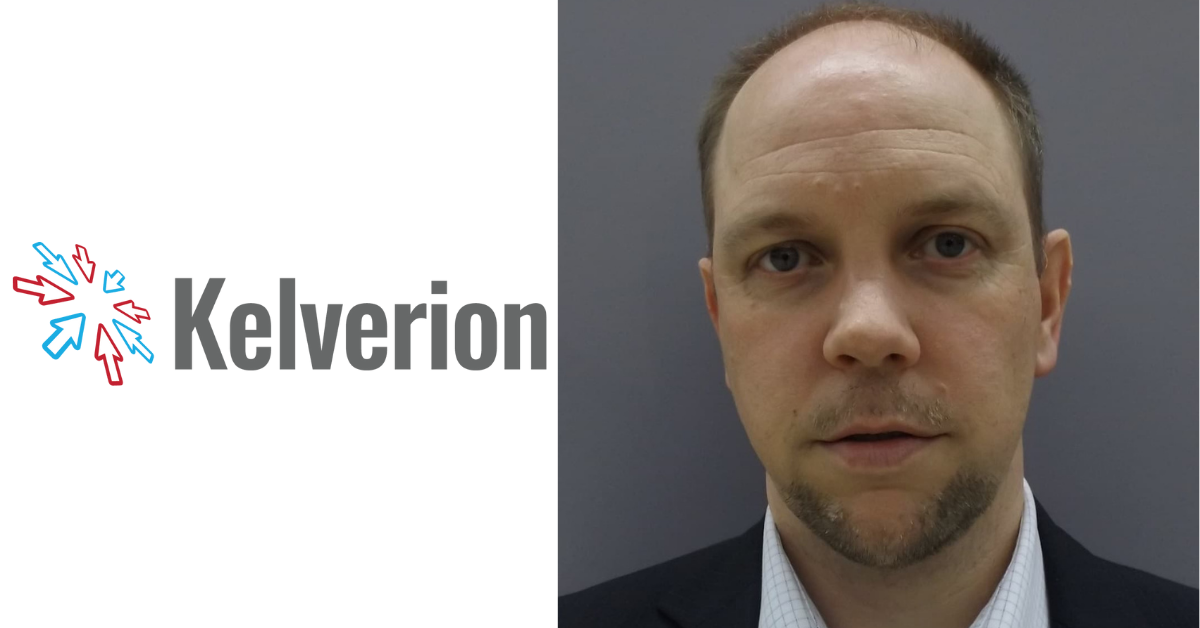
Greg has over 20 years’ experience in designing solutions in the enterprise and managed services arena. For the last 10 years Greg has been working full time in the IT Process Automation space helping customers automated their service desk processes. Greg has led numerous large scale customer automation projects for Kelverion providing technical pre-sales, solutions architecture and services delivery. Greg now leads the services team at Kelverion and also manages the ready built automation solution content creation. We caught up with Greg before his talk on service management automation at SITS...
1. What are you most looking forward to at SITS 2022?
It will be great to interact with delegates in person and hear first-hand what challenges they are facing in 2022. This will be Kelverion's first in-person event in over 2 years.
2. What tips would you give Service Desk & IT Support Professionals looking to drive their IT services forward?
The key thing is that organisations can't continue managing IT and fulfilling requests manually. The status quo cannot continue with disperate and divergent locations of resources, and the increasing drive on IT to be more efficient and responsive. To move your IT forward, you need to start integrating and automating your enterprise management tools so more of the day to day work is done automatically, freeing up your people to work on the business-critical functions which require human input.
3. What's the best thing about helping customers automate their service desk processes?
Witnessing the business improvements and increased customer satisfaction that the end-users report. As their automation journey progresses, continuing our work with what customers are looking to automate next.
A definite highlight is our customers seeing the end-user satisfaction improve, as well as the better day-to-day life for the people in the service desk teams, because the boring, repetitive tasks are being completed automatically.
4. How did you get into the IT profession?
I’ve always had an interest in technology and had early computers from a young age. I took a course in computers and electronics at college and went on to study a combined degree in electronics and computer science at university. Although I was good at electronics I found out I was much better at computer science! After university I was offered a role on a graduate programme with British Telecom designing new IT networking products and solutions.
5. What can visitors look forward to in your session?
Useful information based on real world experience from someone who has been working in IT automation for 14 years. I've helped hundreds of customers implement automation around their service desks and IT processes. I’m looking forward to sharing with attendees what you can do, how you can do it and enabling them to benchmark where their organisation is on their automation journey.
You can catch Greg's session 'The reality of Service Management automation' on 11 May 2022 at 10 - 10:45am, Theatre 3 at SITS, The Service Desk & IT Support Show at ExCeL London.
Register for a free visitor pass, here.