


Strong Tech Foundations Build a Successful Workforce
Having a strong foundation of skills and knowledge is essential if we expect tech pros to be efficient, productive and innovative in the global workforce. Yet around the world, hiring managers, HR professionals and industry leaders are noticing that while IT professionals possess valuable technical skills, they sometimes lack foundational knowledge. This poses a problem in a world where technology is woven into the fabric of every organization and employers are already facing many challenges.
Before we dive in further, let’s take a minute to level set. Foundational knowledge is the what and why — the understanding of how networks function, how technology enables a business to run, how different areas of technology work together, and why things like data analytics and cybersecurity are crucial to business operations. Technical skills are the how – the expertise required to perform tasks and use programs and tools in real-world scenarios.
Hiring managers and workforce development professionals play an important role in working toward a solution to this issue. That’s because it’s vital that we upskill existing workers. For all of the talk about millions of openings, the real issue is that today’s hiring managers need IT professionals that have comprehensive foundational technical skills.
But it’s not as simple as finding great IT pros – you need to build them and continue to provide them with opportunities for growth. Fostering an environment within your organization where open dialogue about strengths and weaknesses is the norm will help set tech professionals up for success from the get-go.
In today’s tight labor market, training, upskilling and reskilling hold the keys to creating a more digitally fluent workforce that will propel the industry forward. Supporting your employees and offering them opportunities to learn and fill knowledge gaps is a key factor in creating a vibrant workforce.
Missing Fundamental Knowledge is a Global Issue
Over the last year, I have spent time with CIOs, CISOs, and hiring managers from around the world. For example, in September 2022, I was invited by Amorn Chomchoey, Chancellor of the Thailand National Cybersecurity Agency (NCSA), to teach his security operations center (SOC) team about visualizing security alerts and events using a tool called Security Onion.
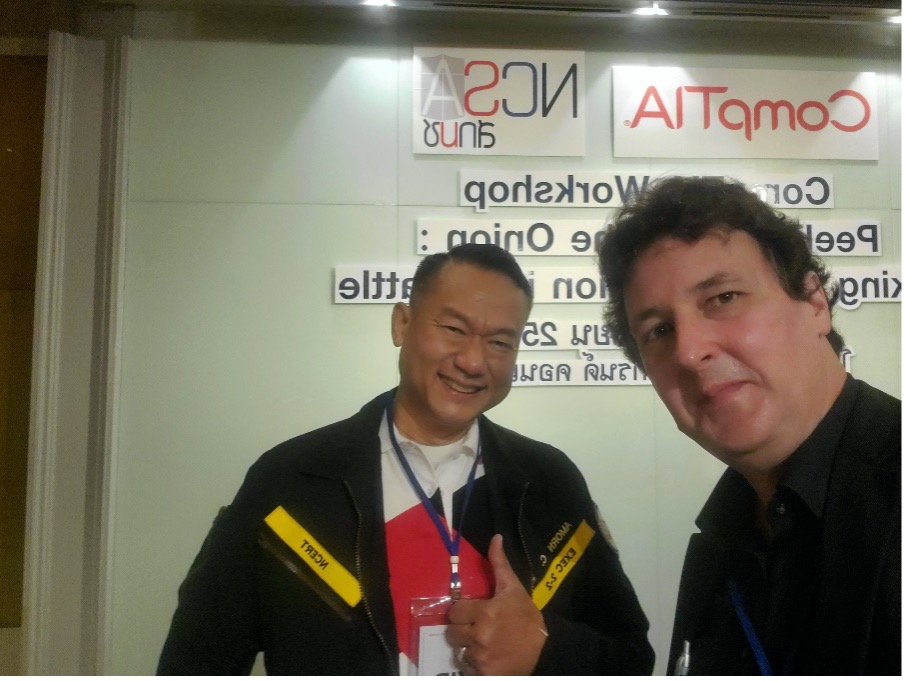
Working with NCSA’s Chancellor, Amorn Chomchoey during a security bootcamp for about 100 of his employees
Chomchoey’s employees are deeply talented. They know how to use tools like Security Onion, and we had fun teaching each other new things. They were stronger than many other professionals I’ve met around the world.
But even though many of them have advanced cybersecurity knowledge, almost all were missing foundational knowledge, such as how applications and networks talk, specifically in reference to network protocols. Many of these workers also needed information about how the Domain Name System (DNS) works in more detail, from recursive lookups to NXDOMAIN requests. After all, it’s difficult to discover various types of DNS-based attacks if your workers don’t know the essentials of DNS in the first place.
This problem is not unique to Chomchoey’s team. Industry leaders from around the world find that their employees don’t always have adequate technical foundations. I’ve heard about this for years from hiring managers about their otherwise talented IT and security employees.
For example, Mike Geraghty, chief information officer for the State of New Jersey, said that he and his team spend a significant amount of time teaching first-year security employees the foundational elements of operating systems and networks. They will often say, “You can’t protect a network if you don’t know how it works.”
I have also noticed that professionals with more advanced skills don’t always understand some of the more basic, essential networking protocols. I’ve met penetration testers who lack a fundamental understanding of the hypertext transfer protocol (HTTP), arguably the most often-used and often-hacked protocol that exists.
This fundamental knowledge is critical and helps to build more well-rounded tech professionals. It behooves any hiring manager to have an open dialogue about an employee’s skills at the beginning of the hiring process.
Why the Disconnect?
I’ve found that the in-demand, well-rounded IT and security professional needs to know the foundations. This includes knowledge of:
- Typical networking handshakes, including the TCP 3-way handshake, the TLS/SSL handshake and HTTP
- Storage concepts, both in terms of hard disks and cloud storage (e.g., Amazon S3)
- How to read log files
However, hiring managers often note that professionals are weak in these areas. There are several reasons why this happens. First, security professionals are increasingly expected to specialize in areas of IT and security. As people specialize, they tend to skip things to bring focus.
Second, sometimes IT professionals don’t want to highlight foundational skills, especially when trying to make a good impression during the interview process, because they fear that talking about such basic things might lead employers to think they don’t know or possess the more advanced, in-demand skills. Without these conversations, hiring managers don’t know what foundational skills candidates possess – or lack.
Third, organizations don’t always do a great job onboarding their employees. For example, the onboarding process may not allow for new employees to demonstrate their knowledge level. Sometimes, what we think is a healthy dialog between employee and employer isn’t all that helpful.
As you can see, there are several reasons for the disconnect, but ultimately it boils down to a lack of digital fluency among employees of all ages.
Building Digitally Fluent, Well-Rounded IT Professionals
Digital fluency is the measurement of a person’s – or even an organization’s – ability to use a particular technology effectively to accomplish a project or a goal. Digital fluency doesn’t mean that you know how to use a device as a consumer, but rather that you have in-depth knowledge of how – and why – that particular device works.
When it comes to IT and security professionals, it’s important for them to have the right foundations. Strong foundations create more top-tier, well-rounded, efficient IT professionals. A great time to look at whether or not your employees have a good understanding of these things is during the onboarding process, or even before. If you understand where their strengths and weaknesses lie when they join your organization, you can offer them training that will allow them to brush up on their weaker skills and help them – and your organization – thrive.
Opening a dialogue where employees feel heard and cared for from the get-go will help them to feel more comfortable coming to you or their manager when they encounter something that they don’t understand or need more training on – even if it’s just a refresh on the foundations.
What Can HR and Workforce Development Pros Do?
Digitally fluent employees help strengthen and unlock the potential of your organization. Ensuring your employees have foundational knowledge is key. Foundational knowledge gives professionals the ability to keep their feet the next time there’s a big shift in how we use the technology that helps propel us forward. Having that foundation also allows organizations to focus on developing “T-shaped workers,” someone with deep knowledge in one area, but adequate knowledge in many areas. It will also make it possible for your security workers to better troubleshoot and identify root causes.
One solution is to create a better screening process to help make sure that potential workers have the foundations that they need. Hiring managers can help on this front by creating job postings and questions that focus on foundational skills. Instead of creating job postings that ask for too many advanced skills, focus on the essentials.
But we all know it is far, far easier on your time and budget to develop internal talent than to go out and find it. It’s important to develop digitally fluent employees that can bring abstract concepts to life and tie learning to real-world examples. In other words, if they learn about the TCP handshake, the next step would be to find an example in your organization’s systems and infrastructure and dig into how it works.
Take a close look at your organization and review what professional development, training and upskilling opportunities are offered to your employees. If you don’t have any yet, start with CompTIA. We can partner with you to offer training solutions that can help you to upskill new and existing employees.
Learn more about CompTIA’s Workforce Development Solutions.
Meet the CompTIA team at stand 570 at SITS, The Service Desk & IT Support Show, on 10-11 May 2023 at ExCeL London. You can now register for your free ticket here.


Visit Pink Elephant at SITS 2023!
It’s the most wonderful time of the year for the IT Service Management sector when the Service Desk & IT Support Show (SITS 2023) rolls back into town.
The two-day free event returns to the ExCeL in London on Wednesday 10 May and Thursday 11 May 2023 featuring 60-plus ITSM vendors – including Pink Elephant EMEA.
Managing director Gijs-Jan Huisman said:
“It’s always a proud moment for Pink EMEA to showcase our services at SITS. It’s one of the highlights in our calendar as it’s such a landmark event for ITSM – there is always such a buzz, and thousands of visitors to engage with.
“What’s more, we have created an exciting and fun game for anyone who visits our stand, so not only will you be able to find out more about our IT services and training offerings, but you could walk away with some fantastic prizes.”
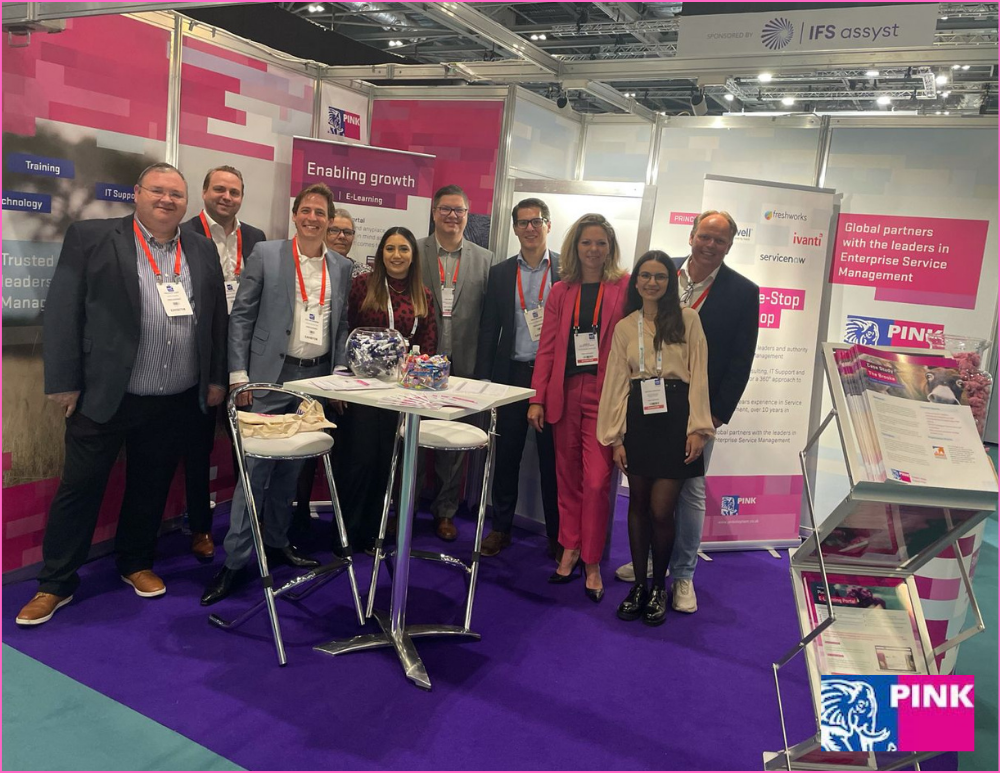
Our cheerful team of Managed IT Services experts, ITSM consultants and Training gurus be at stand 430 (you can’t miss us, we’ll be bright pink), offering information about Pink’s unique one-stop-shop service.
ITSM Technology
Head of Technology Ramond Keesmekers will explain how our Technology solutions can help your organisation reduce costs, improve service delivery, and streamline your business operations.
Managed IT Services
Sam Smith (not the singer) is our head of Managed IT Services and your go-to Pink expert to find out about SIAM IT services and support, outsourced service desks, on-demand application support, ‘Follow the Sun’ IT Support 24/7/365, multi-lingual support services, hybrid IT support services, NOC and service monitoring support, and much more.
E-learning training courses
Our Learning and Development consultant Nektaria Kriketou will happily introduce you to our Pink e-learning portal. Brand-new e-learning training courses are regularly added to the portal, offering interactive learning materials, quizzes and a trial exam for globally recognised certifications, including ITIL®, Lean, COBIT, and DevOps.
Speaker sessions with Pink
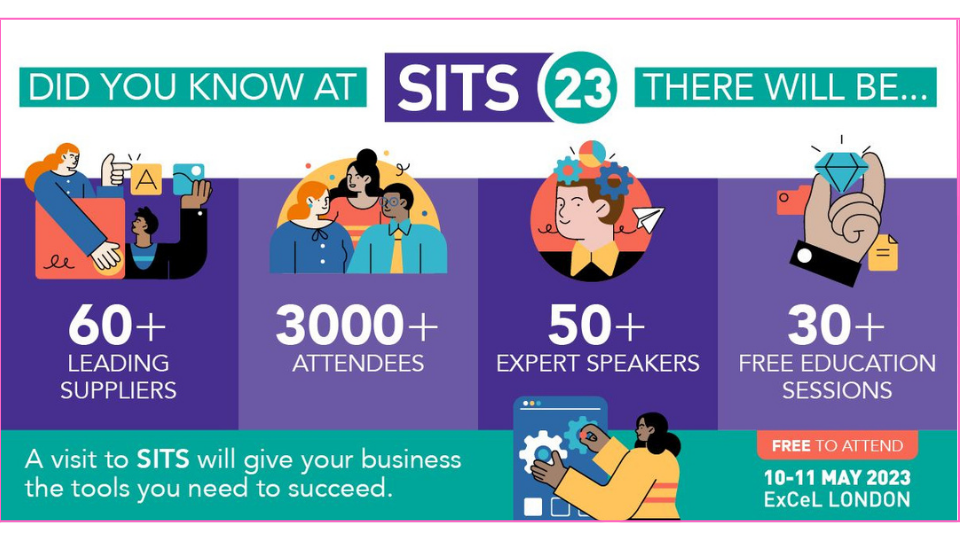
Over two days, three theatres will hold 60 free educational sessions, alongside a Keynote theatre, Breakfast Briefings and Hot Topic workshops: Seminar Schedule – SITS 2023
Pink Elephant is proud that this year we are more present than ever, hosting no less than three speaker sessions with our head of Technology, Misha Macinski.

Join us for the following seminars:
- 10 May, 15:00-15:45, Theatre 3
‘Haven’t you forgotten something? Crucial considerations before buying a toolset’ - 11 May, 08:30-09:30, Theatre 1
– Exclusive pre-show session (breakfast included).
– Interactive discussion on this year’s three key challenges and trends for IT Service Management organisations.
– With Pink Elephant, Freshworks (vendor) and Teijin Aramid (customer). - 11 May, 14:00-14:45, Theatre 2
– How to solve real-life Service Management challenges through theory, practice and tooling.
– With Pink Elephant, Freshworks (vendor) and Teijin Aramid (customer).
Characters and prizes!
Furthermore, we will have an especially colourful character walking around – let’s just say it’ll be an Instagram moment – and, as Gijs-Jan mentioned above, there is a spectacular prize-winning game on offer if you come and visit us. All will be revealed nearer the time!
SITS 2023 organisers are expecting more than 3,000 IT Service Management professionals to come along to catch up on the newest IT service solutions and see demos in action, with the goal of streamlining ITSM systems.
SITS 2023 Event Director Alice Fulton from Diversified Communications said:
“The innovation and development we are seeing in the IT Service Management sector currently is electrifying.
“SITS 2023 is really looking like a world-class showcase of our amazing industry.”
What is Pink Elephant EMEA?
Pink Elephant is a global Service Management specialist. We connect people, processes and technology to optimise our clients’ end-to-end (Enterprise) Service Management initiatives. We uniquely offer training, consultancy, IT Support and ITSM technology services all under one roof. Expect more. Expect Pink.
Register for your free passes to SITS 2023 here. See you there!

The “New Last Mile” of the Office Network
The office network has been in a near-constant state of evolution since dumb terminals and token rings. MPLS unlocked the ability to connect LANs. VPNs allowed end-users to work remotely while still being behind the firewall. Wi-Fi made intra-office travel easy and lessened reliance on extensive cabling. The WAN is slowly giving way to SD-WAN. New software and cloud-based networking componentry are allowing vendors to reimagine firewalls and routing. These things have marked significant steps in the evolution of last-mile network infrastructure.
But with the advent of SaaS applications, and a global pandemic pushing workers out of their offices, ITOps teams are facing an entirely new type of network evolution. One that is forcing them to confront the realities of the work-from-anywhere movement that is here to stay. And rising to meet this challenge will require a new focus on the end-user—and keeping them productive regardless of their location.
What is the Office Network?
Given the advent of virtual and cloud networking, it’s probably easiest to start by explaining what the modern office network isn’t. What the office network isn’t, is the DevOps network. The office network is built for end-users, whereas the DevOps network is built to support the strategic goals of an organization. For example, all of the network infrastructure required to maintain an e-comm storefront for a large retailer is the DevOps network. All of the network infrastructure required to keep that large retailer’s workforce productive is the office network.
There has been a push in recent years by network management vendors to think of the two somewhat interchangeably, but they serve vastly different purposes and are more often than not supported by different teams with different goals.
The office network is where collaboration happens. It’s where productivity happens. It’s where work gets done. So it makes sense that the most important stakeholders on the office network are end-users, and this is where things get a little dicey for ITOps teams.
Because the latest evolution of the office network isn’t about what it is, it’s where it is.

The Office Network is Where?!
Once comfortably behind a firewall, and well under the purview and control of ITOps teams, the modern office network is now anywhere end-users are, and they are increasingly somewhere else. Anywhere else. And often on infrastructure that’s beyond the teams’ control. We’re talking about home networks, coffee shops, 4G & 5G hotspots, campsites, beaches, and so on. In the telecom/ISP world, this part of their infrastructure is often referred to as “the last mile” of the network—basically from the trunk line to the destination—so we’re calling this modern work-related equivalent “the last mile of the office network.
If the most important stakeholders on the office network have decided to move to this new iteration of the last mile, how does the ITOps team continue to do their job? How can we ensure a remote workforce remains safe, connected, and productive? How does a team troubleshoot a network they can’t see and don’t control?
The answer is for ITOps to focus on the things they can control—the major drivers for end-user productivity. These fall into three major categories:
- Network connectivity
- Software and application usage
- End-user hardware
These three categories comprise the bulk of end-user experience outcomes. Luckily, monitoring and managing these areas, regardless of end-user location, isn’t as difficult as you might think. So long as you have the right tools.
Managing the Last Mile with Auvik
Auvik has been investing in the development of tools that will allow network management to evolve alongside this changing landscape and that will lead to new ways of managing and enabling positive end-user experiences. Auvik’s platform is evolving to meet the needs of ITOps teams dealing with distributed, hybrid, and remote workforces.
We’re excited to be able to bring a series of product releases over the next year that will reimagine Auvik as a single platform for ITOps teams. These features will include:
- Monitoring and managing networks better than ever
- Discovering and managing SaaS applications and shadow IT in play across your remote workforce
- Unlocking end-user device visibility and management.
These new additions to Auvik will enable ITOps teams to ensure the end-users they support remain productive and happy no matter where they are, while also ensuring businesses aren’t wasting money or exposing themselves to risk through unsanctioned or unwise additional software and hardware.
IT is constantly evolving, and our tools must as well. As the need to enable new methods and locations for work and productivity continue, so too must the definition of network monitoring and management. We won’t reach the last mile of the office network with the same technology from yesterday. It’s time to enable ITOps teams to keep the workforce connected, no matter where.
Auvik will be exhibiting on stand 473 at SITS, The Service Desk & IT Support Show, on 10-11 May 2023 at ExCeL London. Register for your free ticket here.

Learn how Workativ helped the GoTo team to auto-resolve repetitive IT queries, issues, requests, and improve their employee experience.
IT service desk managers are the unsung heroes of your organization. An IT Service Desk team is responsible for ensuring that the IT support services are provided promptly, that the correct level of service is provided, and that employee IT issues & requests are resolved as soon as possible.
Given that, an average day can be anything but normal for an IT Service Desk Manager. From making sure the service desk team is delivering support services to the employees on time to ensuring the team are adequately skilled and staffed, all way to managing escalations. It could be a busy day.
And more often, they also need to get on escalation calls with vendors and employees to resolve their queries during peak times, making it challenging to an already demanding role. As you can imagine, it’s never a dull day.
As customers adopt new tech and new ways of doing things, employees do not want to be left behind. CIOs are acknowledging the changing needs of employees and business, and tasking IT Service Desk Managers to transform how business can support employees anywhere, anytime using modern approach built on foundation of self-service automation.
Gabriel Grecco - Global IT Service Desk Manager at GoTo, and his team was in a similar situation; increasing calls and ticket volumes as employee size grew, improve employee experience, and modernize service desk model using creative use of emerging technology such chatbots and app workflows.
In this case study, we will discuss how GoTo is using Workativ chatbot platform to set up an automated process to auto-resolve their employees IT queries and requests.
Read the rest of the case studyhere.
By Workativ

The ITAM Forum announces ISO/IEC 19770-1 Certification Patron Program
Less than one month after launching the world’s first ISO/IEC 19770-1 certification scheme for IT asset management, the ITAM Forum today announces a new program to help end-user organizations achieve ISO ITAM certification.
The ISO/IEC 19770-1 Certification Patron program showcases ITAM managed service providers best qualified to help organizations achieve ISO/IEC 19770-1 certification. The ITAM Forum has assessed each Certification Patron against set criteria, and these Patrons must also gain ISO/IEC 19770-1 certification - if they haven’t already - so they have first-hand knowledge of, and experience with, the certification process.
The first Certification Patrons:
Martin Thompson, founder of the ITAM Forum, comments, “These organizations are champions of change within the ITAM industry and have demonstrated their commitment to the highest ITAM quality of standards.
Following the launch of the ISO/IEC 19770-1 certification just last month, we are seeing strong interest from companies wishing to gain certification. But, choosing an ITAM company to partner with is never easy. The Certifications Patrons scheme takes much of the risk and guess work out of this process. End-user organizations can now be assured that if they choose a Certification Patron, they will be choosing an ITAM services company that has met our strict criteria and fully understands ISO/IEC 19770-1 and the certification process.”
About the ISO/IEC 19770-1 certification scheme
Similar to other international standards for management systems (ISO 27001 and 9001), ISO/IEC 19770-1 specifies the requirements for an IT asset management system – the people, processes, and technology necessary to manage IT assets throughout the lifecycle. Prior to the launch of the ITAM Forum’s certification scheme, organizations could not demonstrate the quality of their ITAM practices in a consistent, uniform and globally accepted way.
To find out about the ISO/IEC 19770-1 certification scheme, visit the ITAM Forum’s Knowledge Base. To find out about Certification Patrons, via the ITAM Forum’s Patron webpage.
By ITAM Forum
9 Reasons Why ChatGPT is Not “Enterprise Ready”…Yet
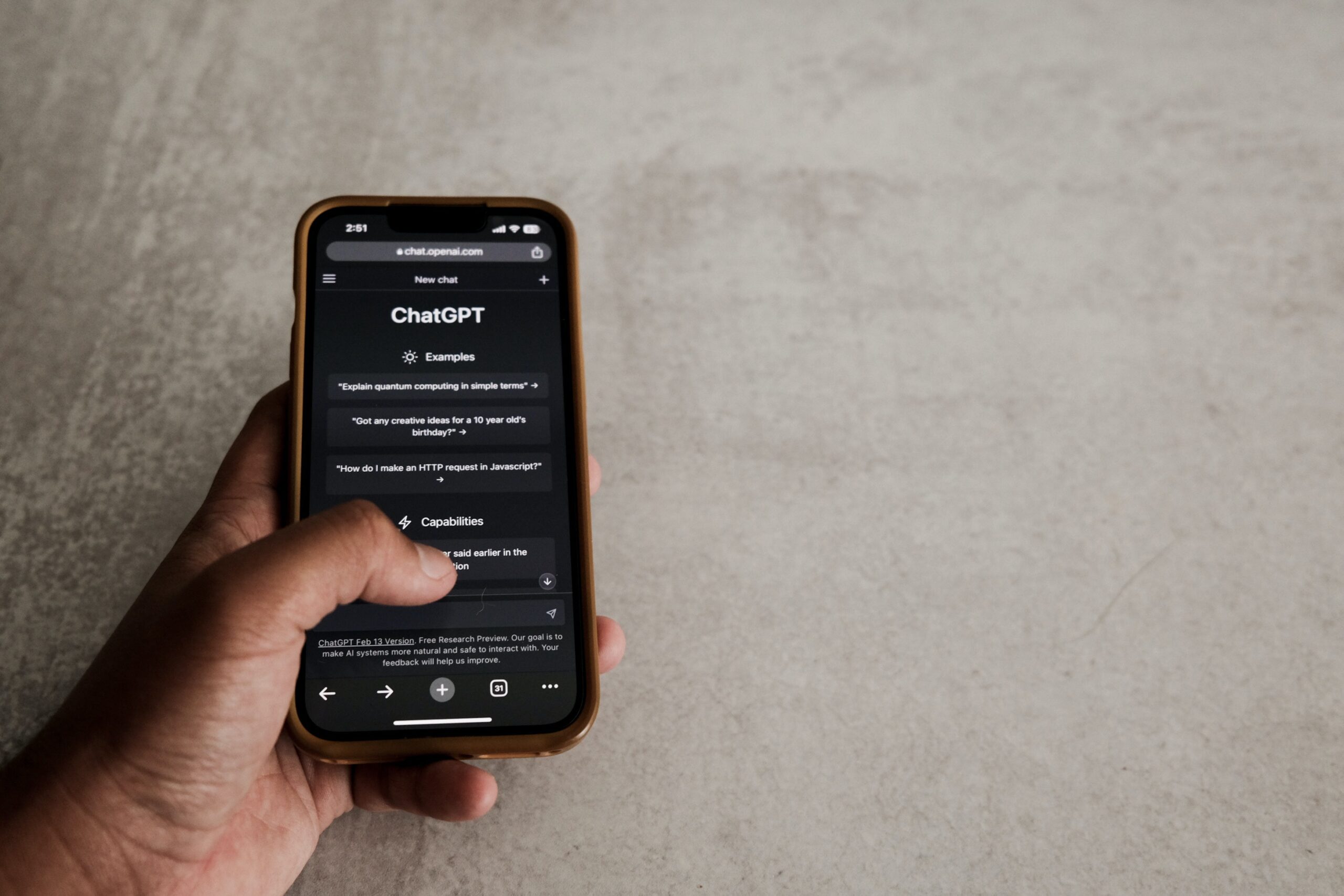
ChatGPT’s ability to converse on seemingly everything has taken the world by storm since its launch in November 2022. Social media is loving it. News media outlets are reporting on it. Educators are worried about it. But is ChatGPT ready to securely support and deliver enterprise applications? Read on to see how BMC is planning to support large language model (LLM)-based approaches for self-service and other enterprise use cases.
Zero shot falls short of enterprise needs
First, some background. Today’s chatbot deployments require initial and ongoing training in order for the natural language processing (NLP) models to understand the user’s intents and extract “entities.”
For example, if I type in: “I need guest wifi for 2 at Dallas tomorrow” the training data that we have already entered is used to classify:
- The intent is “order guest wifi”
- Related entities are “2 guests”
- Location is “Dallas”
- For the next day’s date range (e.g., 2/7/23 to 2/7/23)
LLMs such as ChatGPT, Macaw, and others offer a “zero-shot” approach where there’s minimal to no training data needed to achieve the same classification result. This is attractive for customers who can theoretically go live faster and spend less time tweaking and maintaining the training data. However, LLMs carry gigantic amounts of data compared to a mid-sized enterprise’s knowledge base. So, in some cases, we still need to override the general data to deliver customer-specific responses.
For example, while the general answer to, “How do I install Microsoft Office?” might be to visit Microsoft 365 and download installers, an enterprise might set up its laptops to receive downloads and updates automatically via a provisioning model. Or, while some clients may have hardware and software support queues, others may want Mac versus Windows support, or some other distinction. This level of customization on top of the LLM data is essential for enterprises.
ChatGPT’s path to enterprise deployment
ChatGPT is fun and a great demonstration of artificial intelligence (AI)’s potential, however, it needs to go further before it’s suitable for enterprise chatbot use. Here’s why:
- ChatGPT is a closed model, and it relies on data collected up through 2021. Enterprises require up-to-date information.
- ChatGPT cannot yet be used or integrated with the internal data sources of an enterprise. As such, ChatGPT cannot provide organization-specific knowledge such as, “Where do I download the VPN client?”
- Customers have no control over the language in the response since ChatGPT writes its own answers, which enterprises can’t update or style.
- There’s no dialog management for a turn-by-turn conversation, leading to fulfilment by a backend API. For example, enterprise chatbots need to take a user through a service request like “Order a phone” > “Which phone do you want?” > “Which model do you need?” > “Please confirm” > “Here is a request number.”
- ChatGPT’s new commercial tier features are limited to faster response time and general availability, and enterprise requirements for segregation, security, and uptime, etc. are not yet covered.
- ChatGPT makes up incorrect and untruthful answers at an alarming rate.
- There’s no way to constrain topics. Customers may want their IT/sales/HR chatbots to stick to their domains and not chat about politics, art, or other random topics.
- There’s no clarity on ChatGPT’s data residency, security, or anonymization—all big concerns for an enterprise.
- OpenAI’s founders and leaders have publicly advised that ChatGPT is not ready for production use.
Other enterprise LLMs are available now
BMC has already deployed a customized LLM for summarizing AIOps situations in BMC Helix Operations Management. We are also developing other use cases such as extracting useful information from logs and tickets to answer user queries. This is possible because we can configure and prioritize the LLM to return answers from the enterprise knowledge base. Again, we compare this favorably against ChatGPT, which doesn’t have access to internal websites or knowledge.
The Autonomous Digital Enterprise moves closer
Here at BMC, we’re focused on the future, where enterprises can adapt to changes and thrive amid rapid transformation. LLMs are one of the tools at our disposal, and we are actively experimenting with them to reliably, securely, and transparently deliver accurate answers to employees. ChatGPT provides a fun experimental window for personal use at this early phase, especially for content generation topics. Solutions like BMC Helix Virtual Agent are a better fit for enterprise needs today. We will keep you posted on our progress with LLMs and other AI approaches, and meanwhile, we can all marvel at the progress made by our worldwide community of researchers.
By Madhav Mehra, BMC
BMC will be exhibiting on stand 375 at SITS, The Service Desk & IT Support Show, on 10-11 May 2023 at ExCeL London. Register for your free ticket here.

Network Integration: Moving from Reactive to Proactive with Mature Processes
Auvik and Cherwell recently co-hosted an information-packed webinar to answer some important network integration questions facing network managers: How do we get ahead of our workload and how do we know where to start?
Let’s look at some of the key takeaways from the webinar (you can watch here) on how to move from a proactive to a reactive network operation model, how network integration solutions can help put out fires faster, and when to incorporate tools to automate processes.
Auvik recently posted the results of our 2021 Network Field Report. In it, we see some sobering statistics based on feedback from surveys around the daily tasks faced by IT pros:
- 52% of an IT pro’s time is spent on projects they hate or simply tolerate.
- When asked why they can’t get to projects they’d enjoy doing (i.e., those on their wish list), 45% said “not enough time” is the reason.
Another statistic from the report reveals that 48% of our working hours are spent being reactive — that is, we spend nearly half of our day dealing with problems as they come up. We have no ability to get ahead of the to-do list, and no way to set up a routine that’s preventative. And we hate it.
Why are we stuck?
One of the reasons we’re stuck in a reactive mode of business is because of the overall low maturity of our processes. If we look at the Pink Elephant Maturity Scale as presented by Cherwell (below), most organizations hover around Level Two of the five-level scale, meaning processes are assigned to one or more people, and defined by the project, but not yet at the organizational level, and processes aren’t yet automated. Seventy percent of IT budgets are still dedicated to operations instead of innovating the business. We’re stuck constantly dealing with high-effort tasks that deliver low value.
Getting over that hump will require getting past this second stage, to a place where our processes become more integrated across the entire organization. As we increase the maturity of our processes, we become more proactive.
So, how do we get proactive and finally make more time for the projects we do like to work on? Three steps: documenting, integrating, and automating.
Documenting
Have you ever tried to resolve a network issue without actually knowing how the network is configured? Diagnose remote users’ issues when they have no information? How much time have you spent looking for device passwords in a dozen old files? Or restoring the configuration of a network device that had to be reset?
Without documented processes on how to resolve issues like these, the solutions are only valuable to the person whose head they live in. That’s to say, not very valuable to anyone else in the company. For understanding to become knowledge transfer, we need to document it. For example, the issues above could be negated or rapidly resolved if everyone had access to documentation that explains:
- What’s connected to the network
- How it’s connected
- How it’s configured
Documentation is critical to becoming proactive in network management. With it, you can:
- Spot issues before they happen (and know what to look for)
- Be proactive in upkeep and upgrades
- Solve issues faster and more easily when being reactive is required
Integrating
With network integration, you’ll be able to realize efficiencies across the board. Specifically, if you integrate network management and monitoring platforms with your ITSM solutions, you begin to take real steps towards a more proactive workflow.
-
Proactive monitoring
Shorten the incident lifecycle and identify outages faster. You’re able to target the root cause of issues faster. You’ll get ahead of potential downtime by being able to identify early indicators of network problems, which in turn allows you to prevent future outages.
-
Automatic Updates
Being able to get device inventories to automatically populate within your CMDB actually carries two benefits: You save heaps of time over manually entering the data, and when you’re forced into a reactive situation, the information is already at hand to resolve the issue quickly.
-
Automatic Updates
Like an extra set of unblinking eyes, your ITSM platform can provide you with alerts the moment an issue is detected. You can then drive actionable intelligence to the right admins within your organization fast.
Automating
No one wakes up one day to a fully automated network. Instead, you get to network automation through a staged process that can span weeks, months, and even years.
The trick? First: Just get started.
How? Start small: think documentation!.
Network inventories? Topology maps? Password rotations? All of these are examples of network functions that can be automated.
Once that’s accomplished, you can look to more complicated network automation, like provisioning servers, rolling out software updates, and pushing new firewall rules.
Don’t let a complicated end-state stop you from starting small and automating simple manual tasks today.
Assessing your organization
Here are some steps to help you get a better understanding of how to begin charting a path towards a more proactive, integrated network environment, and how to get started down the path to automation.
- Identify the most common tickets coming in, such as applications that consistently need to be restarted. For each of these ticket categories, is there a documented process?
- For those processes that aren’t documented, are you able to develop one?
- Ensure all your process documents are well developed, in that they’re repeatable. This makes it easy for different team members to pick up the process and resolve issues efficiently.
- As processes are developed, ask yourself, could this be automated? Is there something off the shelf or easy to deploy to automate this function for a quick win?
- For processes that can’t be automated, can they be optimized? Can the number of steps or dependencies be reduced?
- Don’t forget to document results, both negative and positive. Track changes to your processes and the outcomes they result in. This will help identify processes that are sub-optimal if the results are negative, and more importantly, it will also help you justify future investments in automation.
So if you’re asking yourself, what’s the one thing that I can do right now to get a better handle on my time and start to mature my network integration processes? I’d say start with this—identify your most frequent tasks, document a process around them, and look for opportunities to automate all or part of that process. Free up your time and get back to the IT projects that you enjoy doing, and deliver real value to your business.
===
Appendix: The Maturity Scale — network integration by the numbers
Organizations measure the maturity of service management processes on a 5-point scale that was modeled after the Capability Maturity Model developed at Carnegie Mellon. Organizations may have some processes that are highly mature and others that are not yet well-developed or implemented. This scale should be applied to assess the maturity of individual processes and not the organization’s ITSM maturity as a whole.
So what do these levels look like?
Level 1 – Initial: The initial stage represents the lowest level of process maturity. At this stage, the process is poorly controlled, unpredictable, and reactive.
Level 2 – Managed: At this level, the process has been assigned to someone and it can be implemented in the context of a project, but not yet at the organizational level.
Level 3 – Defined: Processes that reach the third stage of maturity are defined and characterized by the entire organization. They’re implemented proactively and as a matter of routine responsibility, not just in the context of a specific project. The transition from Level 2 to Level 3 can represent the greatest challenge for most organizations.
Level 4 – Quantitatively Managed: Processes in this maturity stage have been effectively implemented at the organizational level and are being operated reliably by process owners and their technical teams. Managers have been able to benchmark the performance of the process and can now use ongoing data collection to monitor the process and find efficiencies. Gartner research suggests that organizations tend to experience diminishing returns when attempting to move beyond Level 3. Investments intended to drive high-level process maturity should therefore be carefully planned, executed, and resourced.
Level 5 – Optimizing: Once a process is quantitatively managed within the organization, the focus shifts away from implementation and toward optimizing the process with a focus on continual service improvement.
By Steve Petryschuk, Auvik Networks Inc.
Meet Auvik Networks Inc. in person at SITS, The Service Desk & IT Support Show at stand 473 on 10-11 of May. For more information and to register for a free visitor pass, please visit www.servicedeskshow.com
Speaker Q&A: James Stanger
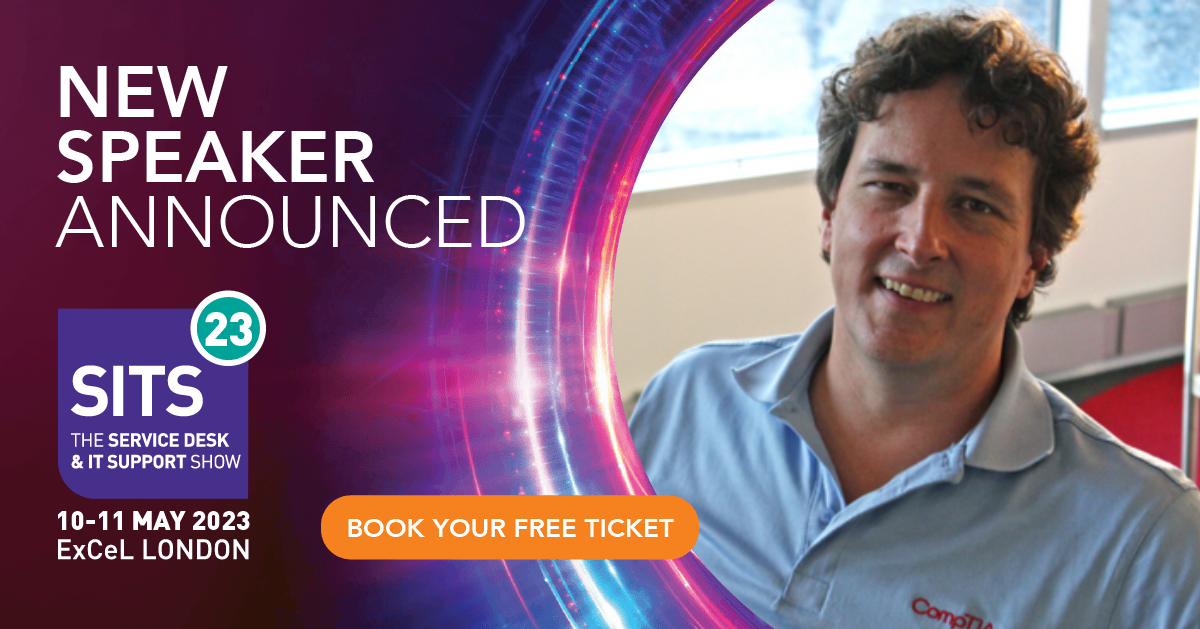
Introducing Dr James Stanger, Chief Technology Evangelist at CompTIA. James is a recognized authority and active consultant in IT service management, security analytics, penetration testing, open source, and workforce development. An award-winning author, blogger, and educator, he has worked with organizations worldwide, including IBM, Tesco, Dell, and the University of Cambridge.
We spoke to James ahead of his talk at SITS in May.
- What’s been the proudest moment in your career?
Recently, I was in Antwerp, Belgium for a meeting of technical support professional leaders. During the meeting, I was approached by a 30-something IT professional who had made the change from being a primary school worker to being an ITSM analyst in less than a year. She thanked me for helping create videos and offerings that helped her make that transition quickly. I’ve been lucky enough to have many experiences like this over the years. I know how lonely it is to not know what to do next, or not have a place to go with my current skillset. Being able to help people avoid those feelings, get into great careers, and support businesses is by far the most important thing I do.
- What tips would you give Service Desk & IT Support Professionals looking to drive their IT services forward?
To me, ITSM is all about customer experience (CX). If support professionals want to move forward, then focus on the key metrics that make customers successful. Once you have those metrics in focus, you’ll then stop boiling the ocean and start focusing on relevant skills and relevant IT services.
Moving forward with the most relevant IT services involves a data-driven approach to transforming the services you provide, and transforming your worker skillsets. Nothing is more transformational to an organization than education. But, just training folks won’t move the IT services needle forward. You need to focus on the trifecta of data gathering, data analysis, and key technical skillsets.
- What’s your most memorable work moment?
Years ago, I was asked by a CEO of an MSP to create a set of pen testing service offerings. She wanted to help her small company move from traditional technical support into security. Based on her request, I started gathering data about the most effective pen testing service services, procedures, and applications. I did some competitive analysis. But, the data kept driving me elsewhere.
Instead of simply focusing on providing an answer to the CEO’s ask, I started asking more, well, penetrating questions about what businesses really needed when it came to security. I listened to the data, which told me that the next best step for her MSP wasn’t providing pen testing services: The next best step was to provide security analytics services – something related to pen testing, but actually quite different. I recommended that the MSP focus on security analytics and SOC services during the CEO’s quarterly senior management meeting. My most memorable work moment was the CEO’s reaction just after my report: She stood up, initially looked a bit confused, kind of shook her head in an almost-exasperated way, and then smiled at the group and said, “This is brilliant – you ignored everything I asked for. You followed the data, and we now know what to do for the next five years.”
- What are the key points you’ll be covering in your seminar session at this year’s SITS?
The organizations that are winning the ITSM day are those that are successfully mapping their technology, workers, and processes to customer experience (CX). IT services and skills without a business partner context are a bit like listening to someone play a guitar randomly without regard for the tune being played. So, as you focus on upskilling workers, focus on capturing CX data, and how specific IT skills can drive a specific business outcome. That way, you’ll be able to create and re-invent relevant IT services.
- What are you looking forward to the most at SITS?
The key thing I’m looking forward to at SITS is interacting with people from around the world. I attend events around the world – from London to Los Angeles, from Cambridge to Cape Town, and from Tokyo to Toronto. SITS is well within the top 5 events, because the sessions are so relevant, and everyone is so willing to share ideas, perspectives, and experiences.
Dr James Stanger's session titled ‘Are you (and your workers) eXperienced?’ will be held at SITS, The Service Desk & IT Support Show, on 10-11 May 2023 at ExCeL London. You can now register for your free ticket here.

The Future of the Network is End User Experience. Are you Ready?
When you think of a network, what comes to mind? MySpace, Facebook, Instagram, TikTok… LinkedIn if you’re all business? No, no, no, not what I meant! Not social networks – IT networks.
What comes to mind now? Switches? Access points? Firewalls? A score of ethernet cabling? For us too, the network symbolizes all the traditional things that Auvik helps IT teams around the world manage and monitor.
But the not-so-secret reality, however, is that what we call “the network” is changing. The new network of today goes beyond the traditional infrastructure within the span of control for most IT teams. The new network has expanded to include everything that’s connecting your end users to the applications they need to do their jobs. Unless you’ve been hiding under a rock these past couple of years, this probably isn’t a surprise!
Don’t get me wrong—the world still absolutely needs all of the physical network devices, cabling, access points, etc. that connect us all. And there are still countless enterprise and SMB networks around the world that need to be managed by network professionals. The challenge is that in the hybrid world we now live and work in, many of these traditional network devices are now controlled by 3rd parties: Your employees’ ISPs, the IT team at the Library, the service providers managing Starbucks hotspots, and the DevOps teams managing the hundreds of SaaS applications that your users rely on.
The rise of end user experience
While I could spend the rest of this article commenting on all the buzzwords surrounding this trend, I’ll instead focus on something that my former colleague Brianna and I have spent far too much combined time researching over the past couple of years. That is the rise of the end-user experience.
End user experience is a measurement of how individuals engage with all of the digital tools that enable them to be productive and efficient, in order to get work done. Monitoring and managing the end-user experience is a critical deliverable for IT teams in today’s new network. There’s also the added weight in a hybrid and distributed workforce to ensure that all employees are well connected. And ensuring that connectivity goes beyond a binary “Up/Down” for applications like Office365 or Google Workspace. Fostering communication, connection, and collaboration between employees is necessary and goes a long way toward employee productivity and efficiency. There are plenty of reports and surveys that make this connection, but as Gartner points out, there’s a clear correlation between employee performance and employee connection.
I could go off on a tangent here, as I firmly believe there’s a huge opportunity for IT and People teams to collaborate and tackle this challenge together, but being more IT-focused, I’ll keep diving into the IT side of things.
“My end users are all in the office, so this new network doesn’t apply to me.”
Sorry to say this, but you’re wrong. It does apply to you.
First, the applications your employees use to get work done are composed of SaaS-delivered applications, cloud-hosted applications, partner company applications, and perhaps some dwindling on-premises apps. As the world continues to move towards XaaS (got a buzzword in!), this is only going to increase. How many of your end users experience externally-managed applications are important, and it poses the same challenges I discussed—as the in-house IT or solution provider supporting this, there are still portions of the network affecting users’ experience you don’t control.
Second, think about the line, “my end users are all in the office.” I would challenge that just isn’t true anymore. At least not all the time. I’ll stay out of the future of work (office/remote work/hybrid) debate in this article, but we can all agree that in every organization there are some users who are not in the office 100% of the time. For example, the traveling sales rep, the augmented overseas support team, or the CEO at their home office preparing for the next board meeting. The reality is that work gets done in a variety of places, often on devices and networks, which again, you have no control over.
This is the new network, and it is something we must all embrace!
There’s a clear correlation between employee performance and employee connection.

Image: Tima Miroshnichenko/Pexels
Managing end-user experience monitoring as an IT team
Have you or your organization started a project around end user or digital experience? If not, start now. It’s coming faster than you think!
Reports out of Forrester Consulting indicate that nearly three-quarters of enterprises are planning a project to improve their end-user experience over the next 24 months, and many businesses are indicating that the tools they have in place today are not sufficient for their team to manage the end-user experience. While the research may be focused on enterprises, it’s only a matter of time for these trends to trickle into businesses of all sizes, meaning every IT professional should be paying attention to these trends.
So what can teams be doing to better manage the end-user experience, and ensure you have your eyes on the performance and availability of this new network?
First, provide experience insights no matter where your users are. What do I mean by this? Today, when one of your end users experiences slowness on their device, on their network, or in the application they’re using, they don’t reach out to your help desk. They sit on the issue. Until it happens again. And again. Perhaps if it persists for hours, or days, or occurs dozens of times they’ll log a ticket. Your help desk is blind to these end-user experience issues, and the productivity impact it’s having.
To that end, it’s critical your helpdesk team has visibility and quantitative data to understand how end users’ experiences are being affected by the systems they rely on to do their job. And this visibility shouldn’t rely on someone logging a ticket. This is typically referred to as an experience score. In an ideal world, you are monitoring this experience score, and you are proactively resolving issues that are negatively affecting it.
Second, and really this should be the first item, is to educate your service desk on end-user experience issues. Many of us can relate to the call from “John” complaining that his “computer is slow” when in fact it’s an outage at his ISP that’s causing all his issues.
From the traditional help desk’s perspective, there’s nothing that can be done to resolve this (it’s an ISP issue after all!), but this is impacting the user’s experience, and it’s impacting the user productivity. A way forward can start with simple education—helping them pinpoint the issue, and giving them tools to monitor when the issue is resolved. As the help desk evolves the solutions can be improved—such as providing alternative connectivity paths or offering up the closest coffee shop that has free Wi-Fi (with a secure remote-access VPN or SASE gateway of course to ensure the user remains protected!).
What’s next?
Whether you’re sitting in an office reading this article, reading it in the comfort of your remote office, or anywhere in between, it’s clear that the network of 2025 will look a lot different than the network of the 2010s—which is also much different than the networks of the ’90s, ’80s, ’70s, etc. Processes must be revamped, tools must evolve, and the people supporting your end users need to be continuously trained on the new processes and tools.
IT is constantly changing, and that’s what makes it exciting!
By Steve Petryschuk, Auvik Networks Inc.
Meet Auvik Networks Inc. in person at SITS, The Service Desk & IT Support Show at stand 473 on 10-11 May. For more information and to register for a free visitor pass, please visit www.servicedeskshow.com

Meet the brand: Moveworks
Introducing Moveworks, a cloud-based AI platform, purpose-built for large enterprises, that resolves employees’ IT support issues. Instead of tracking issues, Moveworks uses advanced AI to solve them, instantly and automatically — with no human intervention.
Moveworks is pre-trained to understand IT support issues, so it delivers right away and continues to get smarter with every interaction. It enables IT teams at companies like DocuSign, Slack, Broadcom, Procore, Autodesk, Western Digital and many others to deliver a radically better employee experience using machine learning and AI.
Learn a bit more about them before visiting their stand at SITS in May.
What do Moveworks do?
Employees deal with endless distractions: they wait days to get IT support, dig through dozens of systems to find the latest HR policy, and don’t learn about critical internal changes until it’s too late. Moveworks is a conversational AI platform that minimises distractions and maximises productivity by bridging the gap between employees and the systems they interact with every day. It offers a single place employees can go to for help, and automates support issues end-to-end using advanced AI and best-in-class large language models — like OpenAI’s GPT-3.
How did Moveworks get started?
Moveworks was founded in 2016 on the premise that most enterprise issues could be solved with a better understanding of language. To solve for this, Moveworks leveraged advanced natural language understanding to resolve many of the repetitive, mundane issues that arise in IT. Today, Moveworks reaches across domains to solve employees issues at scale. Whether it's an IT, HR, finance, legal, or facilities issue, Moveworks serves as the connective tissue between people and the systems they need to access every day.
What are you looking forward to most at SITS?
It's always great to understand what the goals and challenges are of the global service desk workforces for the short-term future. With a wealth of emerging technology and the prominence of ChatGPT on people's minds, it's great to hear what priorities lie in wait for the industry
Why should visitors come to your stand?
Conversational AI is a must for companies looking to automate mundane processes across the Enterprise, and we welcome all visitors to hear how we're helping companies across the globe like Slack, LinkedIn, Broadcom and more. Generative AI is revolutionising our customers employee experience and the best is yet to come!
Meet the Moveworks team at stand 595 at SITS, The Service Desk & IT Support Show, on 10-11 May 2023 at ExCeL London. You can now register for your free ticket here.